
COMPRESSION
B2-10prose procedureIf the engine exhibits low power, poor fuel economy, or poor idle, check the following:
- 1Ignition system (Refer to section G.)
- 2Compression (Refer to below.)
- 3Fuel system (Refer to section F2.)
PREPARATION SST
SST
49 H010 103
NameCompression gauge
UsageFor Inspection of compression
49 H010 104
NameAdaptor
UsageFor Inspection of compression
INSPECTION
- 1Verify that the battery is fully charged. Recharge it if necessary.
- 2Warm up the engine to the normal operating temperature.
- 3Stop the engine and allow it to cool for about 10 minutes.
- 4Remove the all spark plugs.
- 5Disconnect the distributor connector.
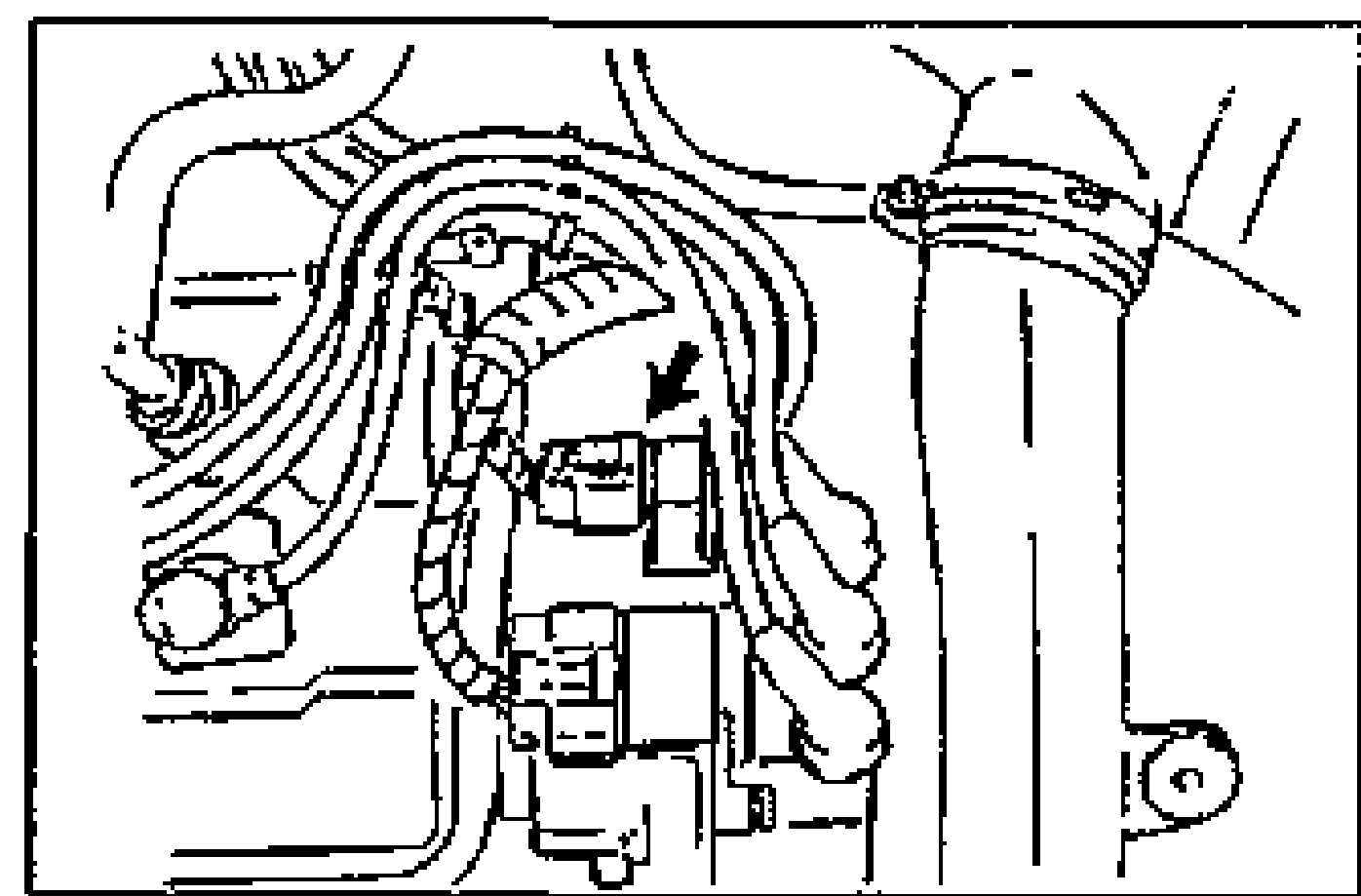
- 6Install SST into the No.1 spark plug hole.
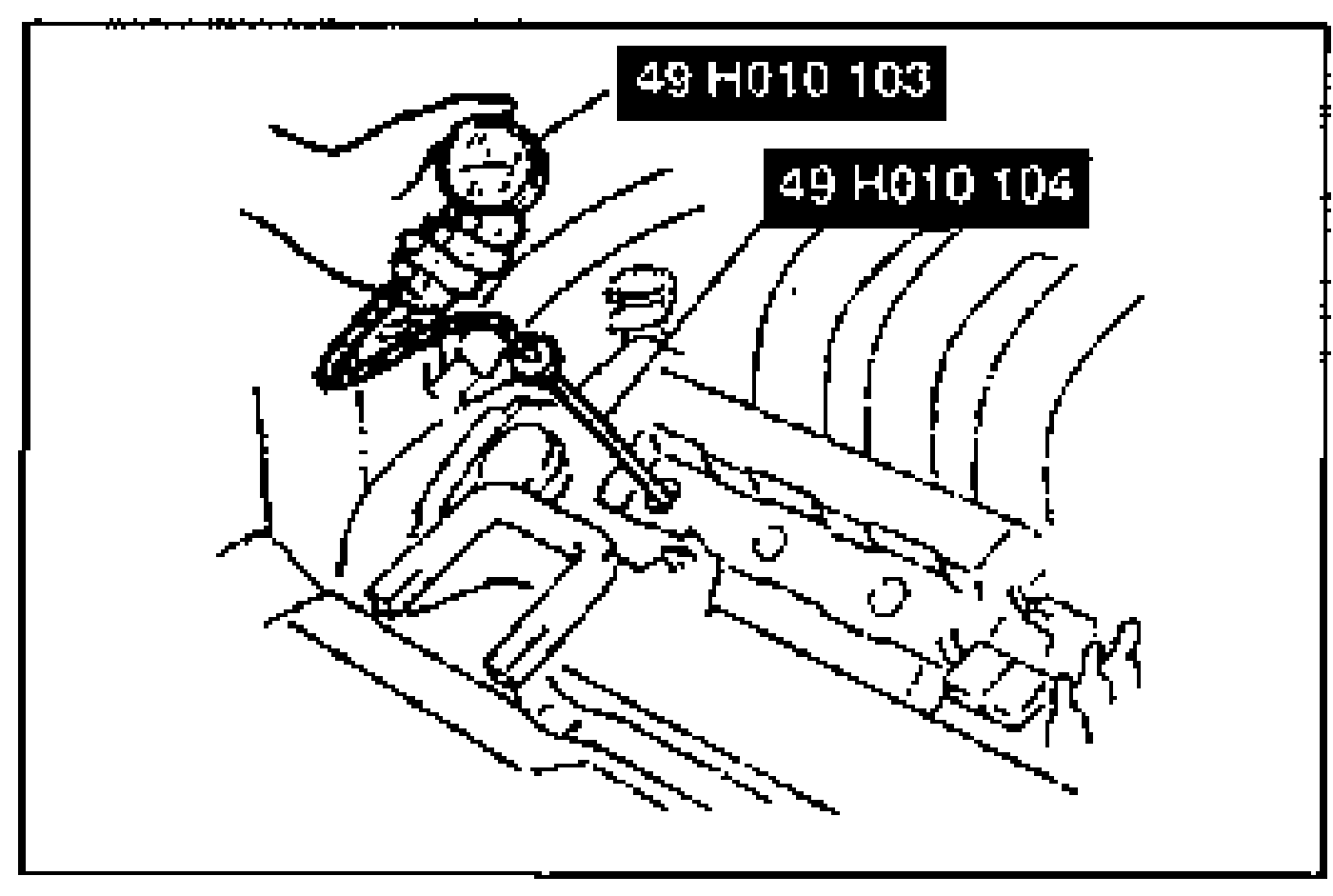
- 7Fully depress the accelerator pedal and crank the engine.
- 8Note the maximum gauge reading.
- 9Check each cylinder as above.
- 10If the compression in one or more cylinders is low, pour a small amount of clean engine oil into the cylinder and re-check the compression.(1) If the compression increases, the piston, piston rings, or cylinder wall may be worn.(2) If the compression stays low, the valve may be stuck or improperly seated.(3) If the compression in adjacent cylinders stays low, the cylinder head gasket may be damaged or the cylinder head distorted.
- 11Remove the SST.
- 12Connect the distributor connector.
- 13Install all spark plugs.
Compression
| Specification | Value |
|---|---|
| Standard | 1,334 {13.6, 193}-300kPa {kgf/cm2, psi}-rpm |
| Minimum | 981 {10.0, 142}-300kPa {kgf/cm2, psi}-rpm |
| Maximum difference between cylinders | 196 {2.0, 28}kPa {kgf/cm2, psi} |
Standard
1,334 {13.6, 193}-300kPa {kgf/cm2, psi}-rpm
Minimum
981 {10.0, 142}-300kPa {kgf/cm2, psi}-rpm
Maximum difference between cylinders
196 {2.0, 28}kPa {kgf/cm2, psi}
| Specification | Value |
|---|---|
| 15 - 22N·m |
15 - 22N·m